From research vision to implementation: important milestones in Kenya and Germany
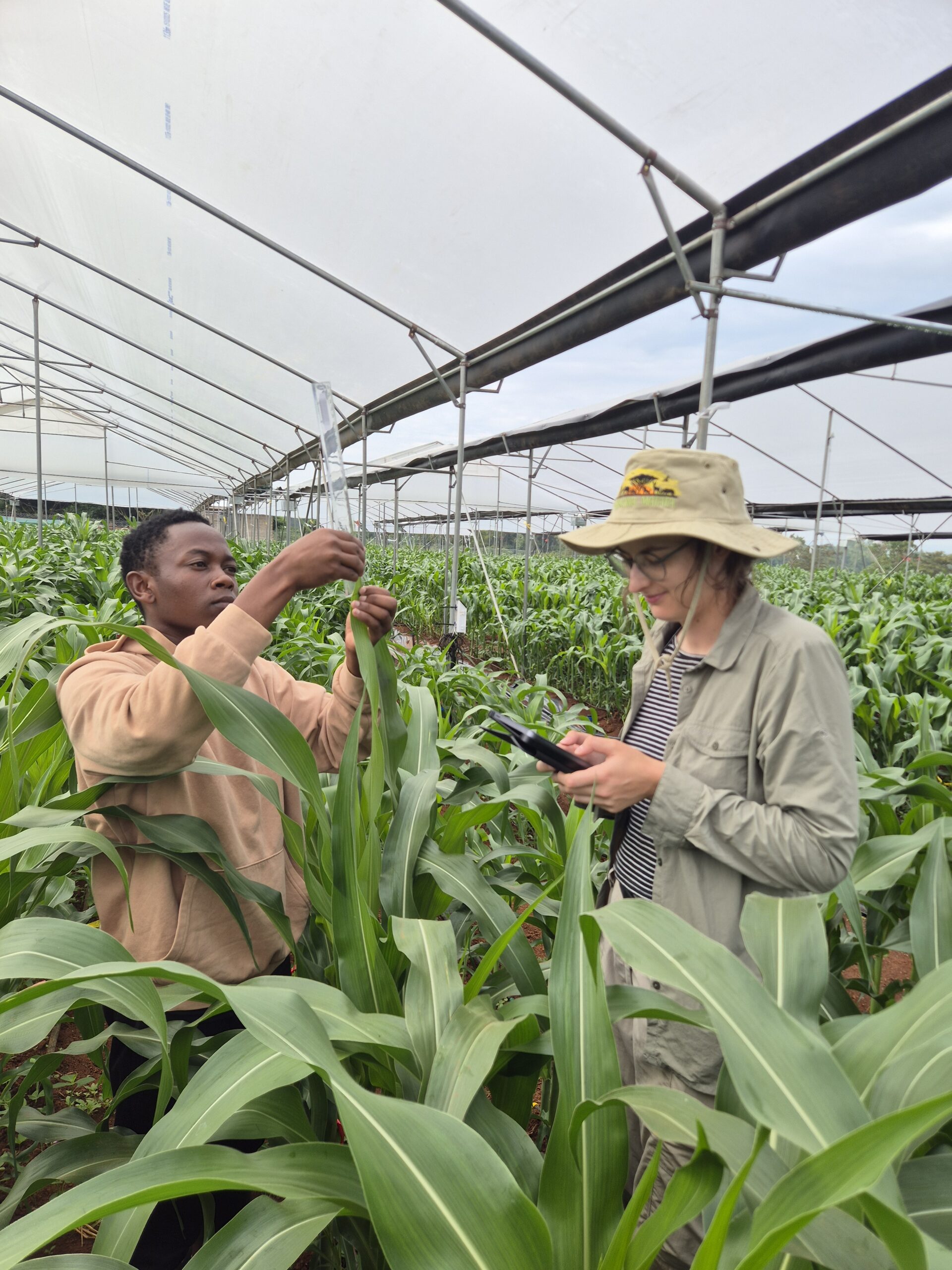
Our first field season is now underway in Siaya, Kenya! This marks an important step in the implementation of our international research collaboration. With preparations progressing at both our Kenyan and German research sites, it is a good opportunity to look back at how far we have come.
In December 2025, the DFG Senate approved the first funding phase (2026–2030) of the research unit, entitled “Concurrent Multiple Abiotic and Biotic Stress Interactions in Maize: Impacts and Mechanisms”.
Our research brings together three major components:
Central experiments: Three field seasons each in Kenya and Germany, investigating the interactions of drought and nitrogen limitation with fungal disease and insect herbivory in selected maize hybrids under rain-out shelters (ROUTs).
Genetic diversity screenings: Greenhouse screening of 900 maize inbred lines, complemented by two years of field evaluations of 200 experimental hybrids.
Crop modelling: Developing the first multi-stress crop growth model to account for interactions between abiotic and biotic stresses, including genotype-specific carbon costs of plant defence in tropical and temperate maize cultivars.
And implementation is already well underway! Here are some of the key milestones achieved in 2026:
- By July: A team of 14 PhD students and 5 postdoctoral researchers had been recruited and onboarded.
- By September: The rain-out shelters at our Siaya research site in Kenya were completed, and the first field season was sown.
- Early October: All project partners came together for the official kick-off meeting at Jaramogi Oginga Odinga University of Science and Technology (JOOUST) in Siaya. The meeting was followed by practical training for PhD students and senior researchers in field measurements and data monitoring.
- By late October: Construction of all 18 rain-out shelters at our German research site in Waake was completed, paving the way for the first field season there in April 2027.
From establishing our international research team and infrastructure to starting the first experiments in Kenya, 2026 has been an exciting year of turning our research vision into action.
