
MultiStress Research Overview
From DNA/genome to field-scale ecophysiological dynamics: integrated research to understand complex multiple stress interactions and genotype-specific stress responses in maize.
Problem Statement
The research is framed within major interconnected global challenges, e.g. food security in the face of climate change.
To meet the projected food demand of a global population of 9.8 billion people by 2050, agricultural productivity must increase by 35-56%.
Climate change and resource scarcity (water, fertile soil) are simultaneously undermining agricultural production capacity and yield stability. Progressive global warming has intensified extreme and adverse weather events in most agricultural regions and is expected to amplify yield instability. Additionally, the distribution ranges of pests and diseases are shifting and expanding, further threatening crop production. Food security is particularly threatened by yield failures occurring simultaneously across major cereal-growing regions.
Historically, scientific research has tended to treat the interactions between plants and environmental stress factors as distinct phenomena, with abiotic stresses — such as drought and nitrogen deficiency — being studied in complete isolation from biotic threats such as pathogens and herbivores. Under real field conditions, however, whether in the tropics or in temperate regions, crops are generally subjected to a combination of multiple abiotic and biotic stressors.
Since stress interactions are typically complex, occur simultaneously, and are highly interactive, an interdisciplinary systems approach is required as proposed by the MultiStress Research Unit (RU 6101). Funded by the German Research Foundation (DFG) with approximately €5.4 million for an initial four-year period (2026–2030), the MultiStress RU addresses the critical knowledge gaps. Coordinated by the University of Göttingen, the international consortium investigates how the growth, yield, and stover quality of maize (Zea mays L.) are affected by the concurrent interactions of drought and nitrogen deficiency with the foliar disease Setosphaeria turcica and stem borer infestations. By bridging the gap between empirical field observations and advanced computational algorithms, the MultiStress consortium aims to provide a first-of-its-kind mechanistic understanding of the effects of combined stress factors at the field scale.
A Holistic Approach: From Genetic Sequence to Agroecosystem Simulation
Pillar 1: Central Experiments under Rain-Out Shelters
At the core of the empirical data generation are highly standardised field experiments conducted simultaneously in Germany (temperate climate) and Kenya (tropical climate). Using state-of-the-art Rain-Out Shelters, researchers manipulate water availability and soil nitrogen levels whilst systematically introducing biotic stressors, specifically stem borer larvae and inoculations with Setosphaeria turcica. By testing selected commercial hybrids in a full factorial design across 216 plots per site, the team captures a wide range of parameters under authentic field conditions, including photosynthetic capacity, stomatal conductance, the activity of the root-zone microbiome, and structural disease damage.
Pillar 2: High-Throughput Diversity Screening
To map the precise genetic architecture of the stress response, the consortium conducts comprehensive diversity screenings. The research evaluates 600 highly diverse inbred maize lines, comprising a EuroSet adapted to European climatic conditions and a KenSet sourced via CIMMYT, which is adapted to tropical environments. Through controlled greenhouse experiments that record transcriptomic and metabolomic responses, followed by extensive field evaluations of 2 x 100 newly developed F1 hybrids, the project identifies the specific gene regulatory mechanisms and polygenic adaptations that confer multi-stress tolerance.
Pillar 3: The MultiStress Modelling Platform
The vast influx of high-resolution empirical and multi-omics data converges within the overarching framework for synthesis modelling. The consortium builds upon a base crop simulation model (SSM-iCrop) and modifies it by explicitly integrating mathematical algorithms that describe the interactions between concomitant abiotic and biotic stressors, as well as their effects on carbon allocation, maize yields and yield quality. By directly linking genotypic parameters with ecophysiological rate variables, the novel MultiStress modelling platform will be able to predict genotype-specific crop performance, yield penalties, and resource use efficiency under highly complex, interacting environmental stress scenarios.

Bridging Hemispheres
Maize is a cornerstone of global food security and provides vital resources for human nutrition and livestock farming in (sub-)tropical and temperate climates. As agricultural production is inevitably forced to expand into marginal, sub-optimal lands characterised by severe water and nutrient limitations, overcoming the challenges of maize cultivation offers the greatest potential for productivity increases, yield stability and, consequently, global food security.
The MultiStress Research Unit tackles this challenge through a deeply embedded North-South scientific partnership. By linking advanced research centers in Germany — including the University of Göttingen, the Technical University of Munich (TUM), the University of Cologne, the University of Hohenheim, the University of Kiel and the IPK Gatersleben — with pivotal East African institutions such as the Jaramogi Oginga Odinga University of Science and Technology (JOOUST) in Siaya, Kenya, the consortium forms a strategic alliance capable of making an impact worldwide. Additional partnerships with CIMMYT, the University of Milano and AGRA ensure that the generated knowledge is directly channelled into international agricultural development.

The formalisation of the improved mechanistic understanding into an advanced crop simulation modelling platform — the MultiStress Model — will allow researchers to extrapolate findings across time and geographic space. During the envisioned Phase 2 of the RU, this platform will be utilised to conduct in silico model-aided ideotype design. By understanding which biological traits disrupt the cascading impacts of multiple stresses, the project empowers future breeding programs to develop highly multistress-resilient maize cultivars tailored for the changing target environments of the future.
Vision of MultiStress Research Unit
The diagram below illustrates the different research foci, convergence of data and knowledge, and outputs and interconnections between Phase 1 (years 1-4) and the envisaged Phase 2 (years 5-8) of MultiStress RU.
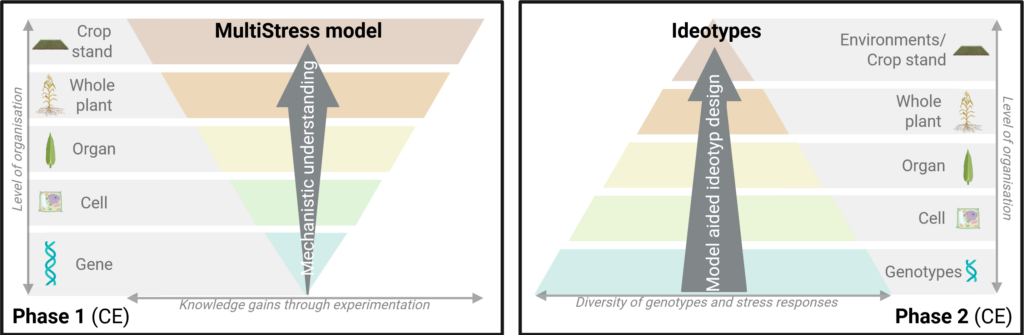
In Phase 1, the central experiment (CE) utilises a limited genetic basis of 2 x 6 commercial hybrids (DE and KE), to improve mechanistic understanding of multiple abiotic + biotic stress interactions across various organisational levels. The experimental findings will be formalised in the mechanistic MultiStress crop model that targets the field scale. In Phase 2, the main goal is to improve the MultiStress model and apply it for designing scenario-specific maize ideotypes, while advancing the mechanistic understanding beyond the knowledge gained in Phase 1. For this, a diverse genetic basis of 2 x 12 experimental hybrids (DE and KE) will be subjected to five well-defined environmental stress scenarios, specific for the two research sites/recommendation domains.
The 6 Subprojects and Their Interconnections
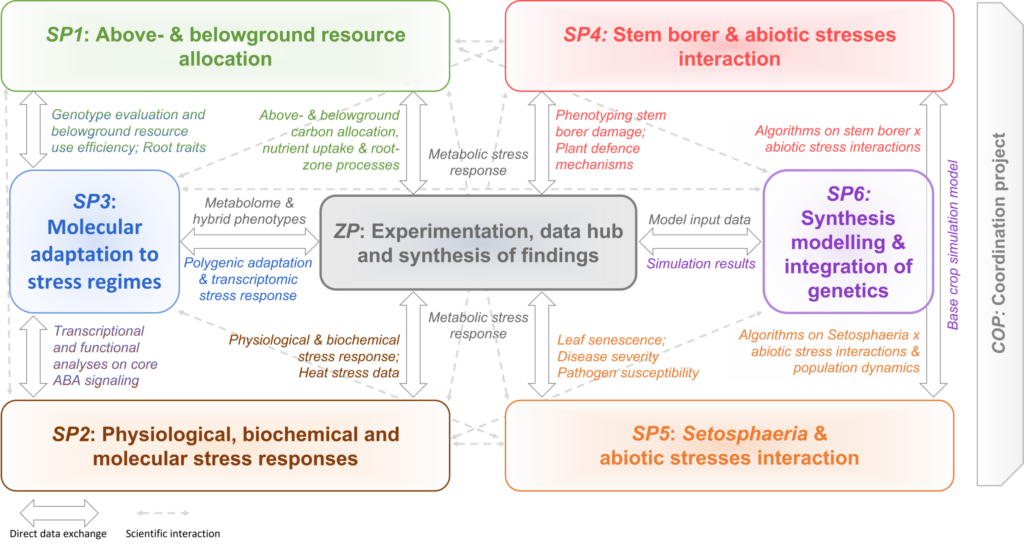
Quick Navigation → MultiStress Research Unit
Discover the central project, coordination project & 6 subprojects

ZP – Central Project
Experimentation, data hub and synthesis of findings
SP1
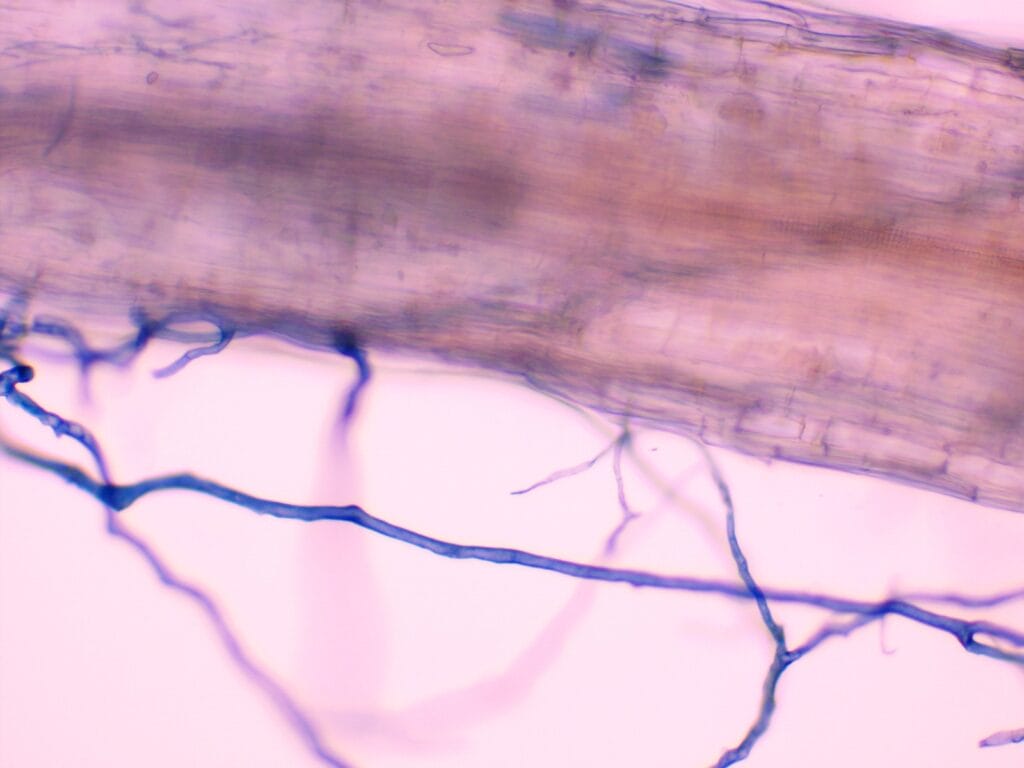
Effect of stress by genotype interactions on above- and belowground carbon allocation, nutrient use efficiency and root-zone processes
SP2
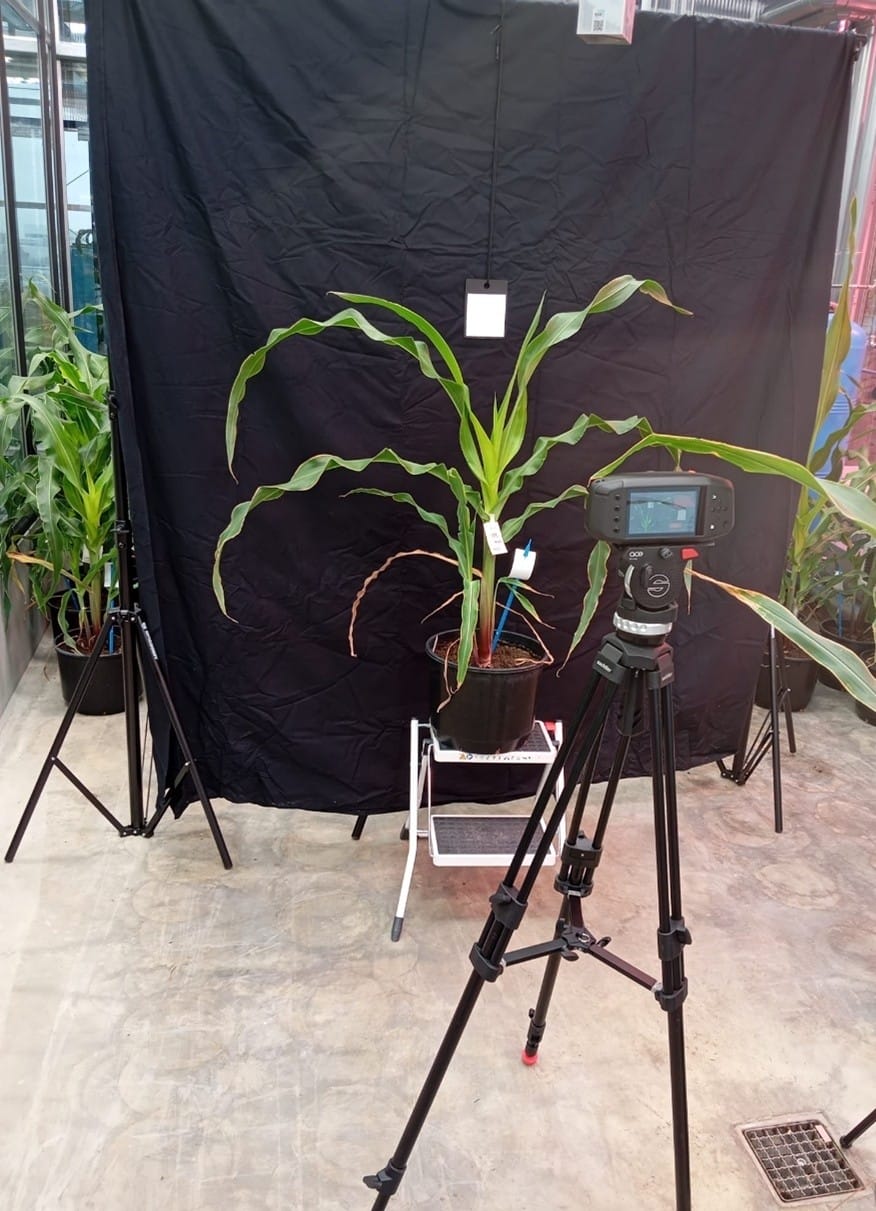
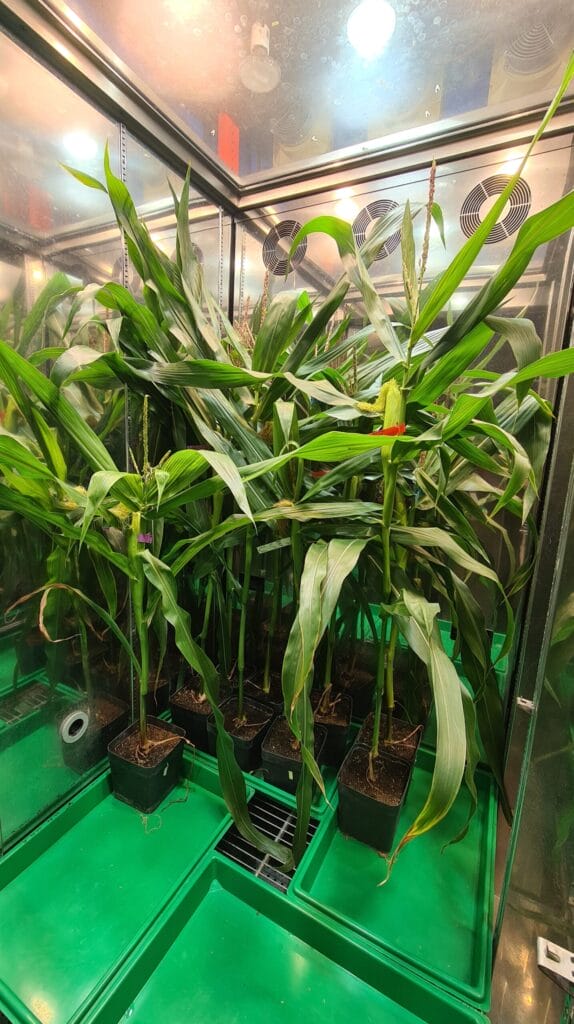
Investigating the physiological, biochemical, and molecular responses of maize to concurrent biotic and abiotic stresses
SP3
Molecular adaptation to contrasting stress regimes
SP4
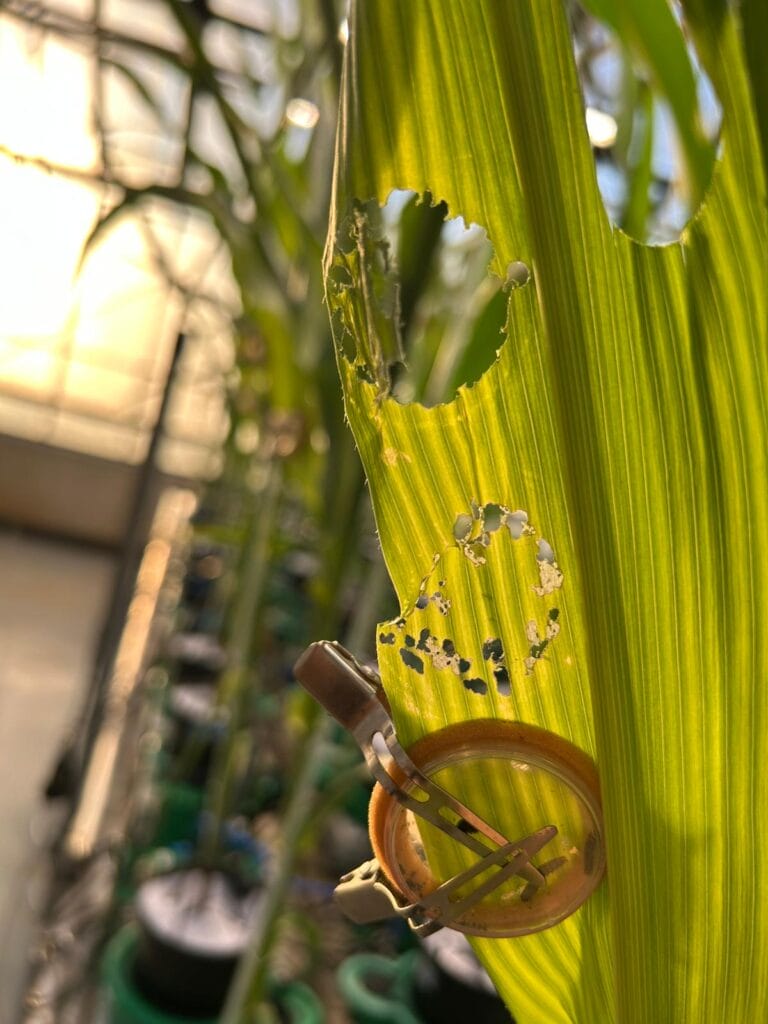
Combined effects of stem borers and abiotic stresses on maize commercial hybrids
SP5
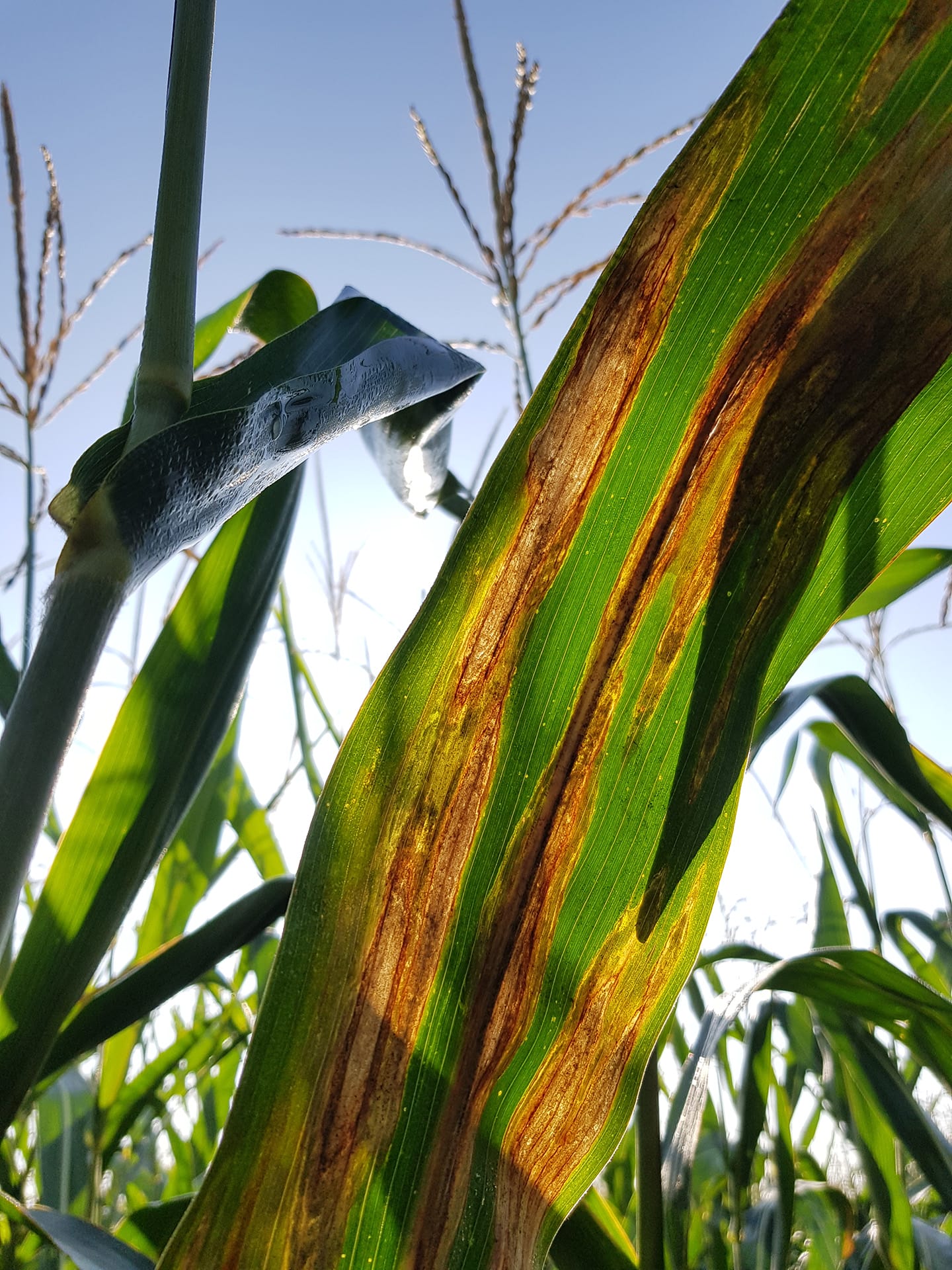
Combined effects of Setosphaeria turcica and abiotic stresses on
maize genotypes
SP6
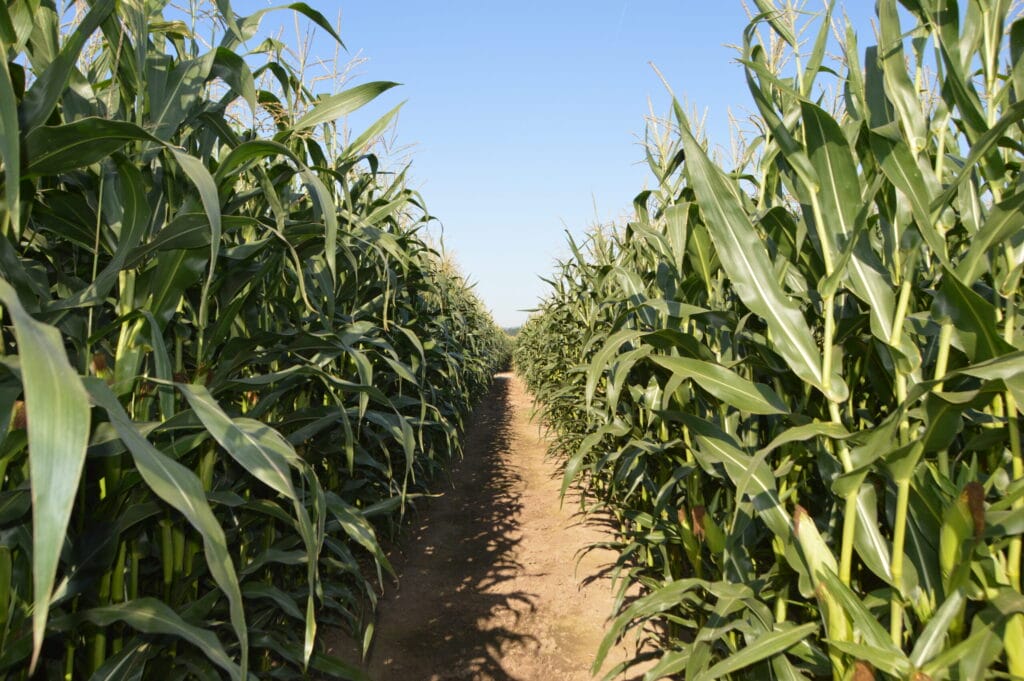
Integrating genetics into crop growth models to understand genotype response to combined (abiotic + biotic) stresses & synthesis of modelling

COP – Coordination Project
Strategy, dissemination, and capacity building