
2026
Munene, Rosepiah; Mustafa, Osman; Loftus, Sara; Suba, Vincent O.; Withanage, Nipuna; Schmücker, Niklas; Bulli, Peter; Rötter, Reimund P.; Otieno, Dennis O.; Ahmed, Mutez A.; Dippold, Michaela A.
In: Plant, Cell & Environment, Bd. n/a, Nr. n/a, 2026.
@article{https://doi.org/10.1111/pce.70845,

title = {Beneath the Drought: Rhizosphere Processes Shape Genotype-Specific Sorghum Responses to Drought-Induced N Limitation},

author = {Rosepiah Munene and Osman Mustafa and Sara Loftus and Vincent O. Suba and Nipuna Withanage and Niklas Schmücker and Peter Bulli and Reimund P. Rötter and Dennis O. Otieno and Mutez A. Ahmed and Michaela A. Dippold},

url = {https://onlinelibrary.wiley.com/doi/abs/10.1111/pce.70845},

doi = {10.1111/pce.70845},

year  = {2026},

date = {2026-08-31},

urldate = {2026-08-31},

journal = {Plant, Cell & Environment},

volume = {n/a},

number = {n/a},

abstract = {Droughts increasingly threaten crop productivity in nutrient-depleted tropical soils. We investigated how water limitation influences rhizomicrobial traits (microbial biomass and functional community composition, enzyme activities) and nitrogen (N) uptake in three sorghum genotypes Makueni local (Mkl), Gadam (Gd), and IESH 22012 (IESH) under well-watered and drought conditions. Depth-specific (0–30 and 30–60 cm) 15N labelling traced N uptake at flowering and grain-filling. Drought reduced grain N content across all genotypes but shoot N only in IESH. Gd enhanced 15N recovery in grains via post-anthesis uptake from both depths under drought, whereas Mkl and IESH rather reallocated N within the plants towards the grain. Compared to well-watered conditions, rhizosphere chitinase activity declined in Mkl under drought, while leucine aminopeptidase (LAP) activity remained unchanged. Under drought, microbial biomass decreased at flowering but recovered at grain-filling, coinciding with enhanced arbuscular mycorrhiza fungi (AMF) colonisation. At grain-filling, AMF associations with specific bacterial taxa aligned with grain N recovery, N-utilisation efficiency, and LAP activity, displaying complementary roles within the plant-AMF-bacterial functional consortia in sustaining N acquisition. Overall, N acquisition in sorghum shifted in a genotype-specific manner from reliance on microbial activity under well-watered conditions to selective AMF-bacterial partnership at grain-filling under drought. These responses highlight the significant role of rhizosphere functional dynamics in sorghum N nutrition during reproductive stages under concomitant drought and nutrient limitation.},

keywords = {},

pubstate = {published},

tppubtype = {article}

}
Hussain, Ijaz; Ur-Rahman, M. Habib; Ikram, Rao Muhammad; Hussain, Muhammad Baqir; Ahmad, Saeed; Roetter, Reimund P.
In: Field Crops Research, Bd. 346, S. 110572, 2026, ISSN: 0378-4290.
@article{HUSSAIN2026110572,

title = {Silicon seed inoculation enhances antioxidant defenses, physio-biochemical mechanisms and yield traits in maize hybrids under heat stress conditions at vegetative and tasseling stages},

author = {Ijaz Hussain and M. Habib Ur-Rahman and Rao Muhammad Ikram and Muhammad Baqir Hussain and Saeed Ahmad and Reimund P. Roetter},

url = {https://www.sciencedirect.com/science/article/pii/S0378429026002480},

doi = {10.1016/j.fcr.2026.110572},

issn = {0378-4290},

year  = {2026},

date = {2026-01-01},

urldate = {2026-01-01},

journal = {Field Crops Research},

volume = {346},

pages = {110572},

abstract = {Context

Heat stress, next to drought, is one of the major constraints for sustainable maize production in arid regions, and a threat to food security. Therefore, it is crucial to investigate mitigation strategies to reduce negative effects of heat stress. In this regard, silicon (Si) could be an ecofriendly mitigation strategy to ameliorate the adversative impacts of heat stress by modifying plant defense mechanisms in maize hybrids.

Objective

The study aims to explore the effects of Si seed inoculation on growth, and productivity of maize hybrids through improved physiological, antioxidants activity and osmolytes production under heats stress conditions.

Methods

Therefore, two years of field trials were conducted to evaluate the effect of Si seed inoculation (0.00, 1.50, 3.00, 4.50 and 6.0 mM), on the physiology, growth, antioxidant mechanisms, grain and biological yields of maize hybrids [DK-6103 (heat tolerant); SW-1080 (heat sensitive)] under control and heat stress conditions. The heat stress was imposed at V6 stage and 50% tasseling-VT-R0-R1 growth stages for a period of 8 consecutive days.

Results

The seed inoculation with 6 mM Si inoculation produced high grain yield and yield contributing traits compared to other Si levels when heat stress was imposed at V6 stage during year 2023 and 2024. Similarly, when the crop was exposed to heat stress at 50% tasseling-VT-R0-R1, the seed inoculation with 6 mM Si produced the maximum cob length (12.7 cm, 14.1 cm), grains per cob (456, 494), thousand kernel weight (TKW) (192.9 g, 204.5 g), grain yield (6.24 t ha−1, 6.74 t ha−1) and biological yield (13.7 t ha−1, 15.2 t ha−1), respectively, during year 2023 and 2024 compared to other levels of Si seed inoculation under heat stress scenarios. The findings are due to improved morpho-physiological attributes, and biochemical defense mechanisms under heat stress conditions. In addition, combined effects of E x G i.e. environment (optimum, heat stress at V6 stage and heat stress at 50% tasseling-VT-R0-R1) x genotype (DK-6103 and SW-1080) exhibited that DK-6103 produced more grain yield (6.02 t ha−1, 6.50 t ha−1) and dry matter yield (11.4 t ha−1, 12.6 t ha−1), during the two years (2023 and 2024), respectively, when heat stress was imposed at the V6 stage compared the ambient conditions. Moreover, SW-1080 produced a smaller grain (13.5%) and biological yield (14.8%) than maize hybrid DK-6103.

Conclusions

Therefore, the Si seed inoculation (6 mM) is the best studied treatment in reducing the negative impacts of heat stress and boosting the grain yield of maize hybrids by modulating the physiological, antioxidant and osmolytic mechanisms.},

keywords = {},

pubstate = {published},

tppubtype = {article}

}
Heat stress, next to drought, is one of the major constraints for sustainable maize production in arid regions, and a threat to food security. Therefore, it is crucial to investigate mitigation strategies to reduce negative effects of heat stress. In this regard, silicon (Si) could be an ecofriendly mitigation strategy to ameliorate the adversative impacts of heat stress by modifying plant defense mechanisms in maize hybrids.
Objective
The study aims to explore the effects of Si seed inoculation on growth, and productivity of maize hybrids through improved physiological, antioxidants activity and osmolytes production under heats stress conditions.
Methods
Therefore, two years of field trials were conducted to evaluate the effect of Si seed inoculation (0.00, 1.50, 3.00, 4.50 and 6.0 mM), on the physiology, growth, antioxidant mechanisms, grain and biological yields of maize hybrids [DK-6103 (heat tolerant); SW-1080 (heat sensitive)] under control and heat stress conditions. The heat stress was imposed at V6 stage and 50% tasseling-VT-R0-R1 growth stages for a period of 8 consecutive days.
Results
The seed inoculation with 6 mM Si inoculation produced high grain yield and yield contributing traits compared to other Si levels when heat stress was imposed at V6 stage during year 2023 and 2024. Similarly, when the crop was exposed to heat stress at 50% tasseling-VT-R0-R1, the seed inoculation with 6 mM Si produced the maximum cob length (12.7 cm, 14.1 cm), grains per cob (456, 494), thousand kernel weight (TKW) (192.9 g, 204.5 g), grain yield (6.24 t ha−1, 6.74 t ha−1) and biological yield (13.7 t ha−1, 15.2 t ha−1), respectively, during year 2023 and 2024 compared to other levels of Si seed inoculation under heat stress scenarios. The findings are due to improved morpho-physiological attributes, and biochemical defense mechanisms under heat stress conditions. In addition, combined effects of E x G i.e. environment (optimum, heat stress at V6 stage and heat stress at 50% tasseling-VT-R0-R1) x genotype (DK-6103 and SW-1080) exhibited that DK-6103 produced more grain yield (6.02 t ha−1, 6.50 t ha−1) and dry matter yield (11.4 t ha−1, 12.6 t ha−1), during the two years (2023 and 2024), respectively, when heat stress was imposed at the V6 stage compared the ambient conditions. Moreover, SW-1080 produced a smaller grain (13.5%) and biological yield (14.8%) than maize hybrid DK-6103.
Conclusions
Therefore, the Si seed inoculation (6 mM) is the best studied treatment in reducing the negative impacts of heat stress and boosting the grain yield of maize hybrids by modulating the physiological, antioxidant and osmolytic mechanisms.
Schnellnavigation → MultiStress Forschungsverbund (FOR 6101)
Machen Sie sich vertraut mit dem Zentralen Projekt, dem Koordinationsprojekt und den 6 Teilprojekten.

SP1
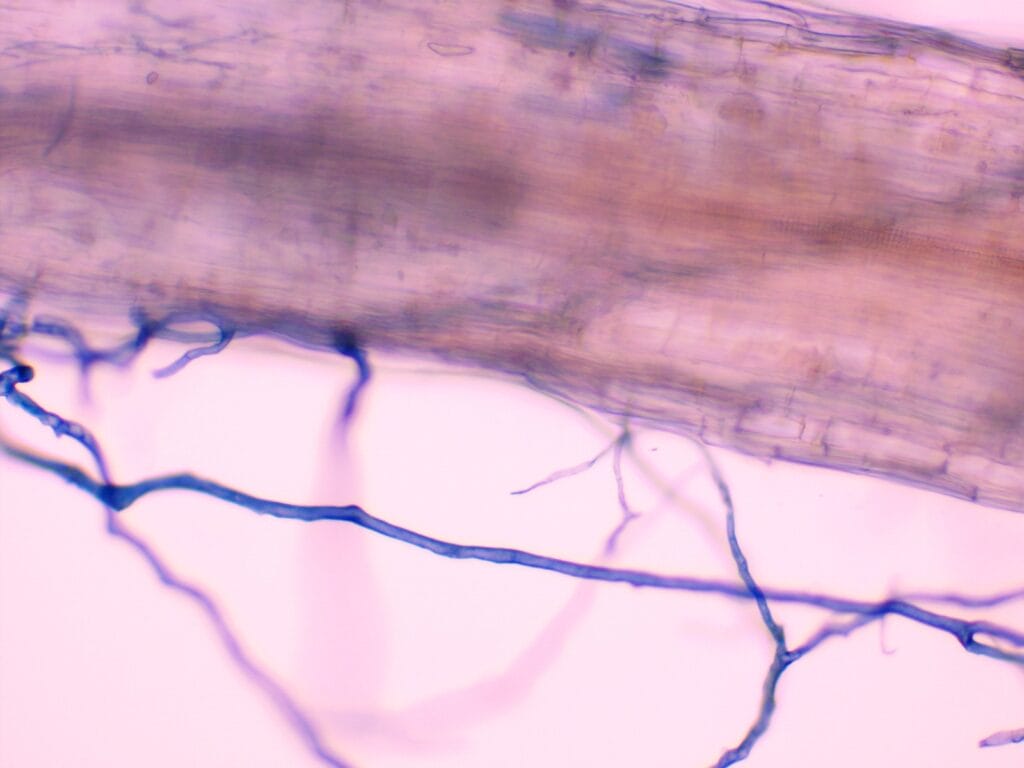
Auswirkungen von Stress-Genotyp-Interaktionen auf die ober- und unterirdische Kohlenstoffallokation, die Nährstoffnutzungseffizienz und Prozesse in der Wurzeltiefe
SP2
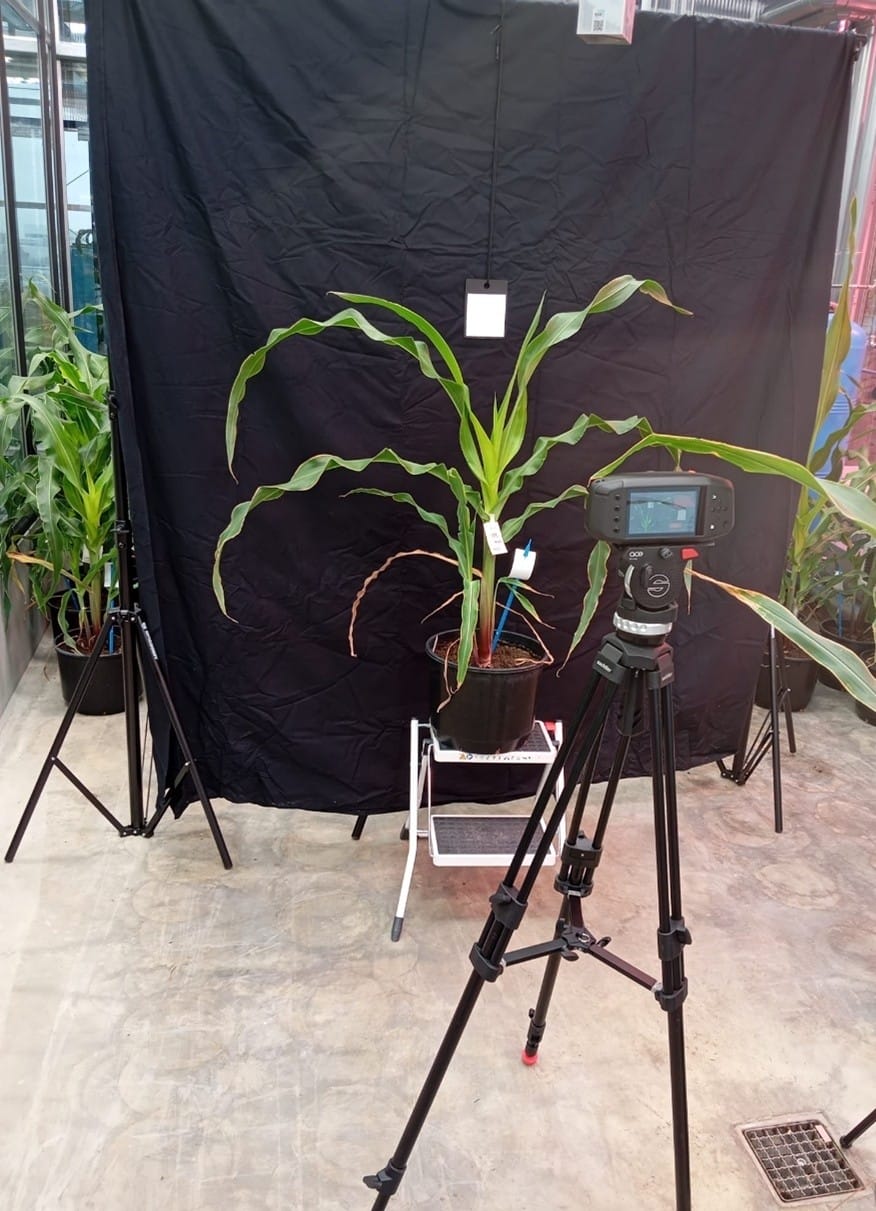
Untersuchung der physiologischen, biochemischen und molekularen Reaktionen von Mais auf gleichzeitige biotische und abiotische Stressfaktoren
SP4
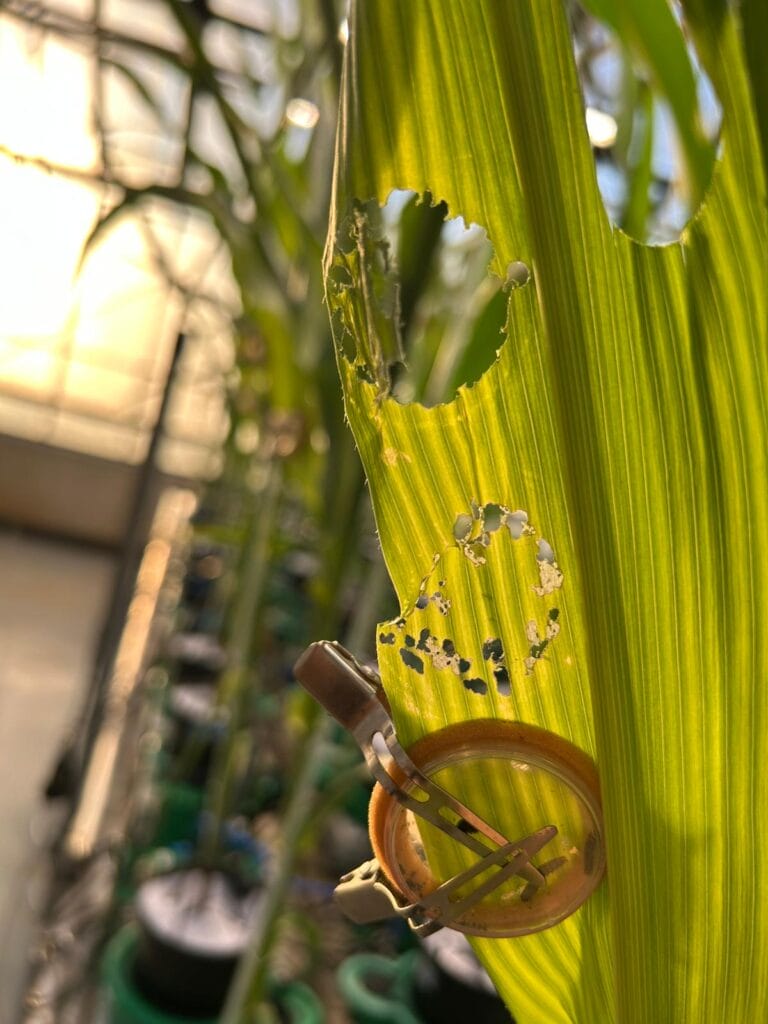
Kombinierte Auswirkungen von Stängelbohrern und abiotischen Stressfaktoren auf kommerzielle Maishybride
SP5
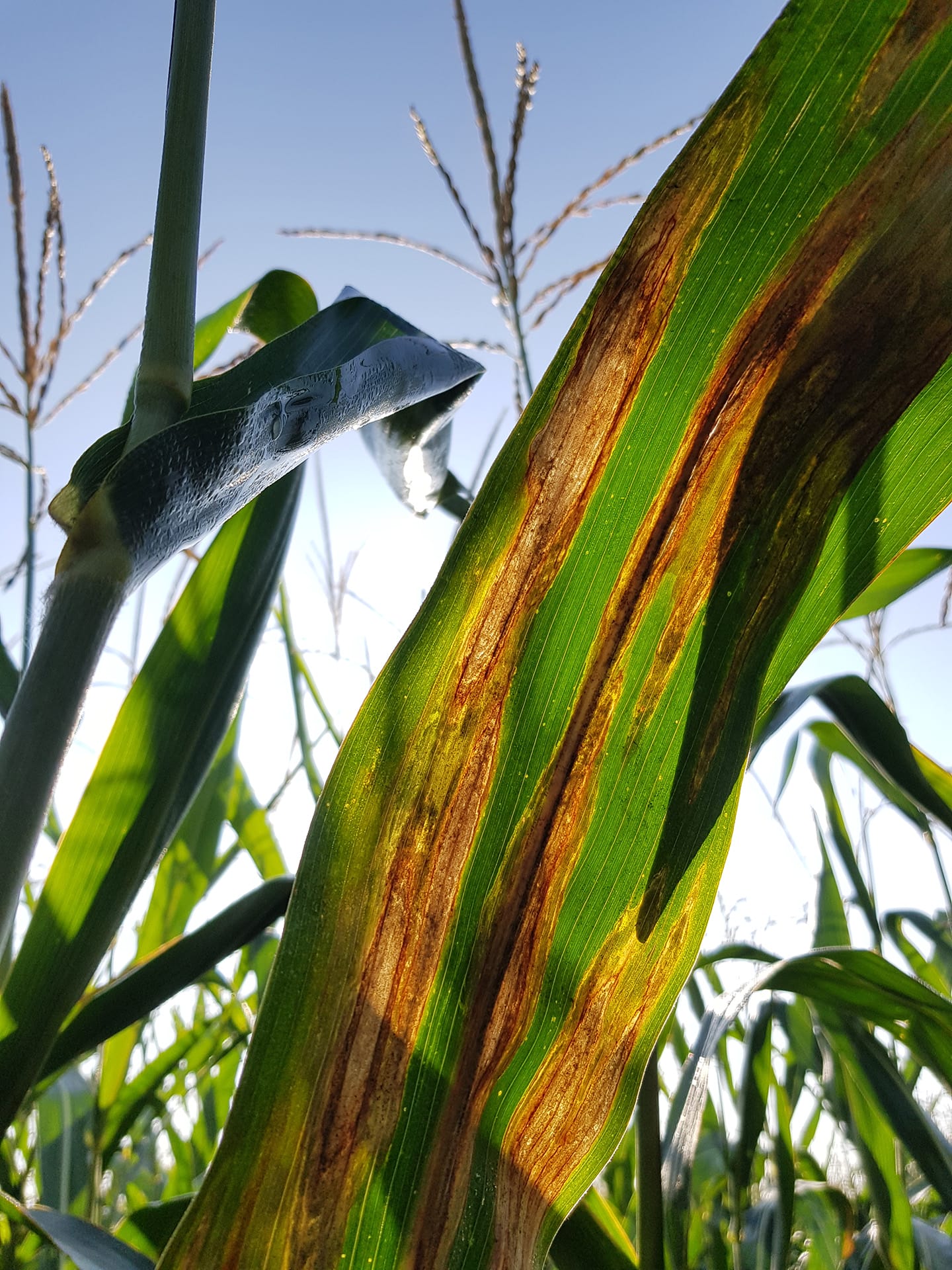
Kombinierte Effekte von Setosphaeria turcica und abiotischen Stressfaktoren auf Maisgenotypen
SP6
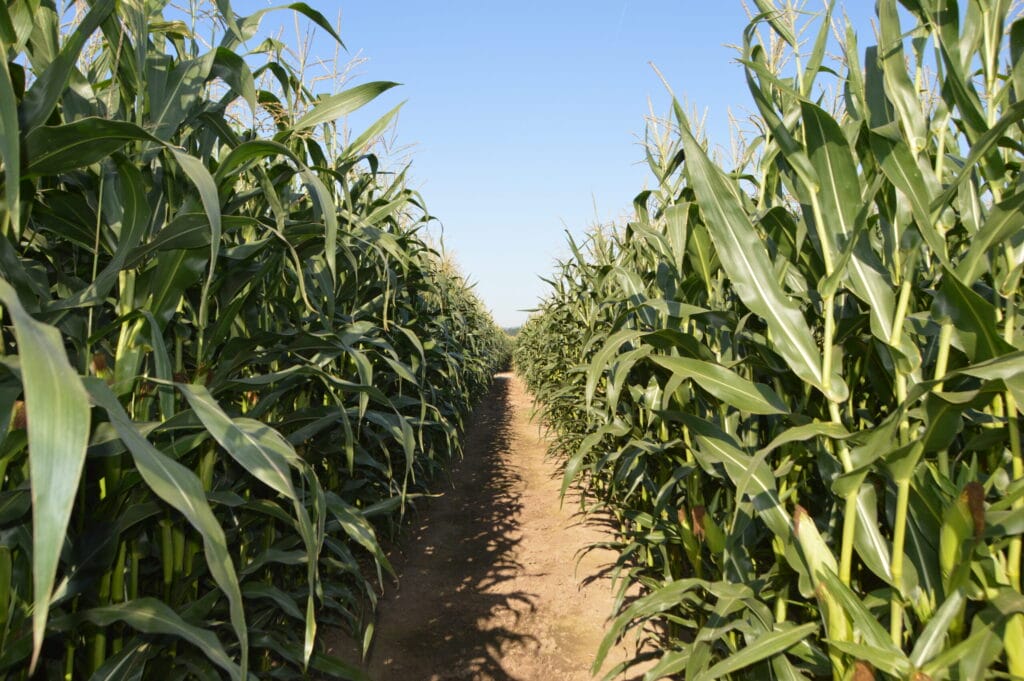
Integration der Genetik in Pflanzenwachstumsmodelle zum Verständnis der Genotyp-Reaktion auf kombinierte (abiotische + biotische) Stressfaktoren und Modellsynthese
