
MultiStress-Forschungsüberblick
Von DNA/Genom bis zu öko-physiologischen Dynamiken auf Feldebene: integrierte Forschung zum Verständnis komplexer multipler Stressinteraktionen sowie genotypspezifischer Stressreaktionen in Mais.
Problemstellung
Die Forschung ist in zentrale, miteinander verknüpfte globale Herausforderungen eingebettet, insbesondere die Ernährungssicherheit im Kontext des Klimawandels.
Um die prognostizierte Nahrungsmittelnachfrage einer globalen Bevölkerung von 9,8 Milliarden Menschen bis 2050 zu decken, muss die landwirtschaftliche Produktivität um 35–56 % gesteigert werden.
Gleichzeitig untergraben Klimawandel und Ressourcenknappheit (Wasser, fruchtbare Böden) die landwirtschaftliche Produktionskapazität sowie die Ertragsstabilität. Die fortschreitende globale Erwärmung hat extreme und ungünstige Wetterereignisse in den meisten Agrarregionen verstärkt und wird voraussichtlich zu einer weiteren Zunahme der Ertragsinstabilität führen. Zudem verschieben und erweitern sich die Verbreitungsgebiete von Schädlingen und Krankheiten, was die Pflanzenproduktion zusätzlich gefährdet. Die Ernährungssicherheit ist insbesondere durch gleichzeitige Ernteausfälle in großen Getreideanbaugebieten bedroht.
Historisch gesehen hat die wissenschaftliche Forschung die Wechselwirkungen zwischen Pflanzen und Umweltstressfaktoren häufig als getrennte Phänomene betrachtet, wobei abiotische Stressfaktoren – wie Trockenheit und Stickstoffmangel – vollständig isoliert von biotischen Bedrohungen wie Pathogenen und Herbivoren untersucht wurden. Unter realen Feldbedingungen jedoch, sowohl in den Tropen als auch in gemäßigten Regionen, sind Kulturpflanzen in der Regel einer Kombination mehrerer abiotischer und biotischer Stressfaktoren ausgesetzt.
Da Stressinteraktionen typischerweise komplex sind, gleichzeitig auftreten und stark interaktiv wirken, ist ein interdisziplinärer systemorientierter Ansatz erforderlich, wie er von der MultiStress-Forschungsgruppe (RU 6101) vorgeschlagen wird. Die von der Deutsche Forschungsgemeinschaft (DFG) mit rund 5,4 Millionen Euro für eine erste vierjährige Förderperiode (2026–2030) geförderte MultiStress-Forschungsgruppe adressiert zentrale Wissenslücken. Koordiniert von der Universität Göttingen untersucht das internationale Konsortium, wie Wachstum, Ertrag und Strohqualität von Mais (Zea mays L.) durch die gleichzeitigen Interaktionen von Trockenheit und Stickstoffmangel mit der Blattkrankheit Setosphaeria turcica sowie Befall durch den Stängelbohrer beeinflusst werden. Durch die Verbindung empirischer Feldbeobachtungen mit fortgeschrittenen computergestützten Algorithmen zielt das MultiStress-Konsortium darauf ab, ein bislang einzigartiges mechanistisches Verständnis der Wirkungen kombinierter Stressfaktoren auf Feldebene zu entwickeln.
Ganzheitlicher Ansatz: von der Gensequenz bis zur Agroökosystem-Simulation
Säule 1: Zentralexperimente unter Rainout-Sheltern
Im Zentrum der empirischen Datengenerierung stehen hochstandardisierte Feldexperimente, die gleichzeitig in Deutschland (gemäßigtes Klima) und Kenia (tropisches Klima) durchgeführt werden. Mithilfe modernster Rainout-Shelter-Anlagen manipulieren die Forschenden die Wasserverfügbarkeit und den Stickstoffgehalt im Boden, während biotische Stressoren – insbesondere Stängelbohrerlarven sowie Inokulationen mit Setosphaeria turcica – systematisch eingebracht werden. Durch die Untersuchung ausgewählter kommerzieller Hybride in einem vollständigen faktoriellen Design über jeweils 216 Parzellen pro Standort erfasst das Team ein breites Spektrum an Parametern unter realitätsnahen Feldbedingungen, darunter photosynthetische Kapazität, stomatäre Leitfähigkeit, Aktivität des Rhizosphären-Mikrobioms sowie strukturelle Krankheitsschäden.
Säule 2: Hochdurchsatz-Diversitätsscreening
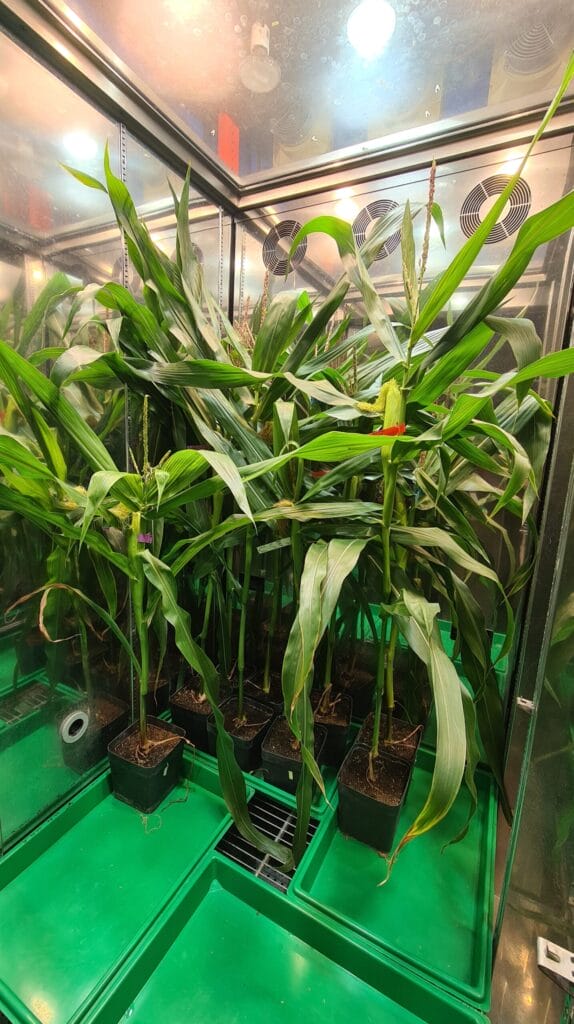
Zur Abbildung der präzisen genetischen Architektur der Stressreaktion führt das Konsortium umfassende Diversitätsscreenings durch. Dabei werden 600 hochdiverse Inzuchtlinien von Mais untersucht, bestehend aus einem EuroSet, das an europäische Klimabedingungen angepasst ist, sowie einem über das CIMMYT bezogenen KenSet, das an tropische Bedingungen angepasst ist. In kontrollierten Gewächshausversuchen, in denen transkriptomische und metabolomische Reaktionen erfasst werden, sowie in umfangreichen Feldversuchen mit 2 × 100 neu entwickelten F1-Hybriden identifiziert das Projekt spezifische genregulatorische Mechanismen und polygenetische Anpassungen, die Multistresstoleranz ermöglichen.
Säule 3: MultiStress-Modellierungsplattform
Der umfangreiche Zustrom hochaufgelöster empirischer und Multi-Omics-Daten fließt in den übergeordneten Rahmen der Synthesemodellierung ein. Das Konsortium baut auf einem bestehenden Pflanzenwachstumsmodell (SSM-iCrop) auf und erweitert dieses durch die explizite Integration mathematischer Algorithmen, die die Wechselwirkungen gleichzeitiger abiotischer und biotischer Stressfaktoren sowie deren Auswirkungen auf die Kohlenstoffallokation, den Maisertrag und die Ertragsqualität beschreiben. Durch die direkte Verknüpfung genotypischer Parameter mit öko-physiologischen Geschwindigkeitsvariablen kann die neue MultiStress-Modellierungsplattform genotypspezifische Pflanzenleistung, Ertragsverluste sowie die Ressourceneffizienz unter hochkomplexen, interagierenden Umweltstressbedingungen vorhersagen.

Brücken zwischen den Hemisphären
Mais ist eine zentrale Säule der globalen Ernährungssicherheit und liefert essenzielle Ressourcen für die menschliche Ernährung sowie die Tierhaltung in (sub-)tropischen und gemäßigten Klimazonen. Da die landwirtschaftliche Produktion zwangsläufig in marginale, suboptimale Standorte mit ausgeprägten Wasser- und Nährstofflimitierungen ausweichen muss, bietet die Bewältigung der Herausforderungen im Maisanbau das größte Potenzial für Produktivitätssteigerungen, eine höhere Ertragsstabilität und damit für die globale Ernährungssicherheit.
Die MultiStress-Forschungsgruppe adressiert diese Herausforderung durch eine tief verankerte wissenschaftliche Nord-Süd-Partnerschaft. Durch die Vernetzung führender Forschungszentren in Deutschland – darunter die Universität Göttingen, die Technische Universität München, die Universität zu Köln, die Universität Hohenheim, die Christian-Albrechts-Universität zu Kiel sowie das Leibniz-Institut für Pflanzengenetik und Kulturpflanzenforschung (IPK Gatersleben) – mit zentralen ostafrikanischen Partnerinstitutionen wie der Jaramogi Oginga Odinga University of Science and Technology entsteht ein strategisches Bündnis mit globaler Wirkung. Weitere Partnerschaften mit dem CIMMYT, der Università degli Studi di Milano sowie der AGRA stellen sicher, dass das erzeugte Wissen direkt in die internationale landwirtschaftliche Entwicklung einfließt.

Die Formalisierung des verbesserten mechanistischen Verständnisses in eine fortgeschrittene Pflanzenwachstums-Simulationsplattform – das MultiStress Modell – ermöglicht es den Forschenden, Ergebnisse über Zeit und geografische Räume hinweg zu extrapolieren. In der für Phase 2 der Forschungsgruppe vorgesehenen Weiterentwicklung wird diese Plattform für ein in silico gestütztes, modellbasiertes Ideotypen-Design eingesetzt. Durch das Verständnis derjenigen biologischen Merkmale, die die kaskadierenden Effekte multipler Stressfaktoren beeinflussen oder unterbrechen, befähigt das Projekt zukünftige Züchtungsprogramme dazu, hochgradig multistresstolerante Maissorten zu entwickeln, die an die sich wandelnden Zielumwelten der Zukunft angepasst sind.
Vision der MultiStress-Forschungsgruppe
Die nachfolgende Abbildung veranschaulicht die verschiedenen Forschungsschwerpunkte, die Konvergenz von Daten und Wissen sowie die Ergebnisse und Wechselwirkungen zwischen Phase 1 (Jahre 1–4) und der vorgesehenen Phase 2 (Jahre 5–8) der MultiStress-Forschungsgruppe.
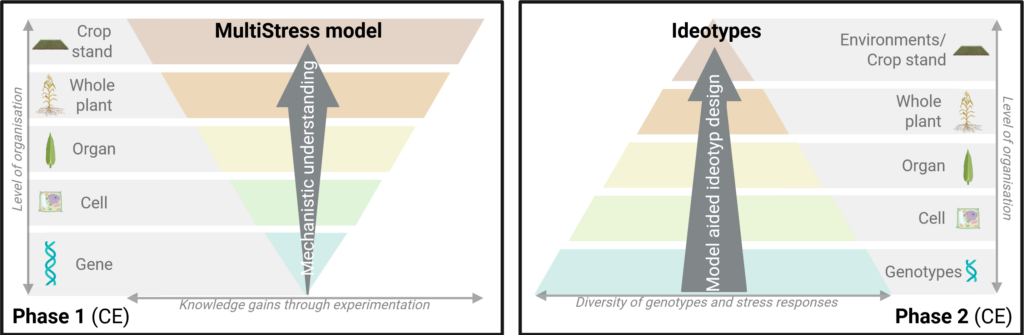
In Phase 1 nutzt das zentrale Experiment (CE) eine begrenzte genetische Basis von 2 × 6 kommerziellen Hybriden (DE und KE), um das mechanistische Verständnis multipler abiotischer und biotischer Stressinteraktionen auf verschiedenen Organisationsebenen zu verbessern. Die experimentellen Ergebnisse werden in dem mechanistischen MultiStress-Pflanzenmodell formalisiert, das auf die Feldebene ausgerichtet ist. In Phase 2 besteht das Hauptziel darin, das MultiStress-Modell weiterzuentwickeln und für das Design szenariospezifischer Maisideotypen einzusetzen, während das mechanistische Verständnis über die in Phase 1 gewonnenen Erkenntnisse hinaus vertieft wird. Dafür wird eine diversere genetische Basis von 2 × 12 experimentellen Hybriden (DE und KE) fünf klar definierten Umweltstressszenarien unterzogen, die spezifisch für die beiden Forschungsstandorte bzw. Empfehlungsklimaräume sind.
Die 6 Teilprojekte und ihre Verknüpfungen
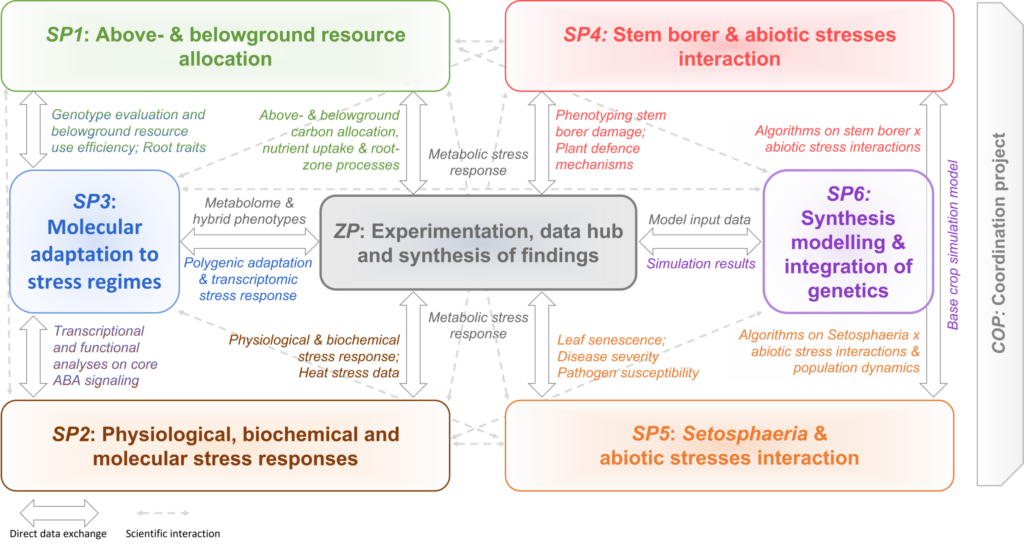
Schnellnavigation → MultiStress Forschungsverbund (FOR 6101)
Machen Sie sich vertraut mit dem Zentralen Projekt, dem Koordinationsprojekt und den 6 Teilprojekten.

ZP – Zentrales Projekt
Experimente, Datenhub und Synthese der Ergebnisse
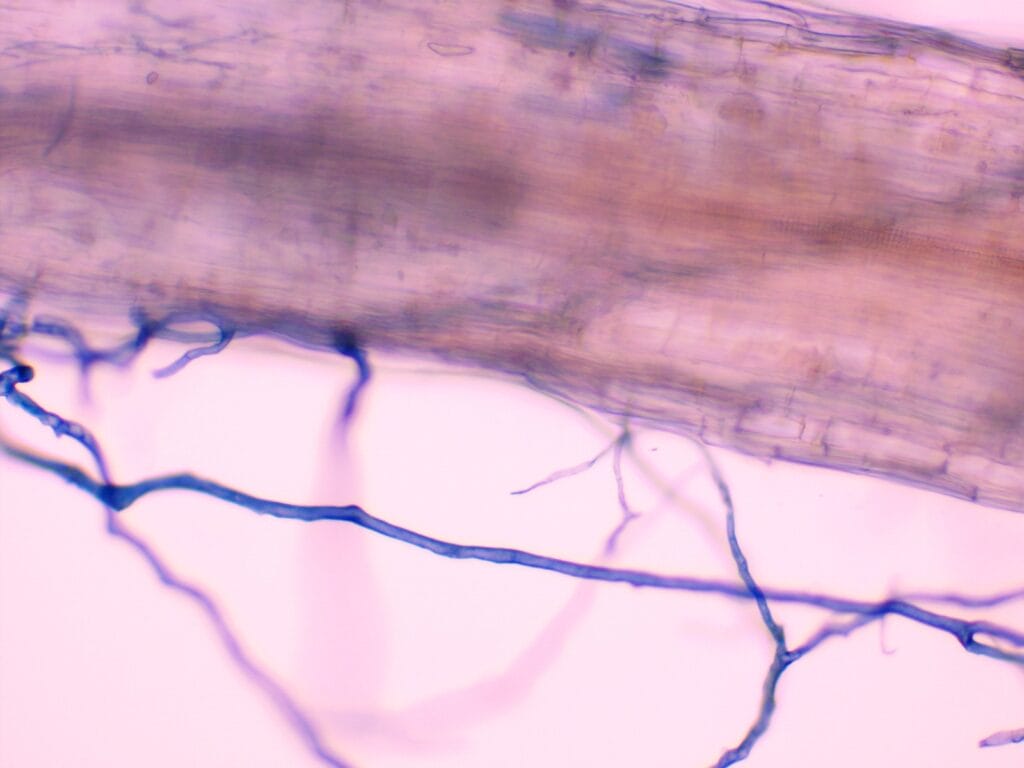
SP1
Auswirkungen von Stress-Genotyp-Interaktionen auf die ober- und unterirdische Kohlenstoffallokation, die Nährstoffnutzungseffizienz und Prozesse in der Wurzeltiefe
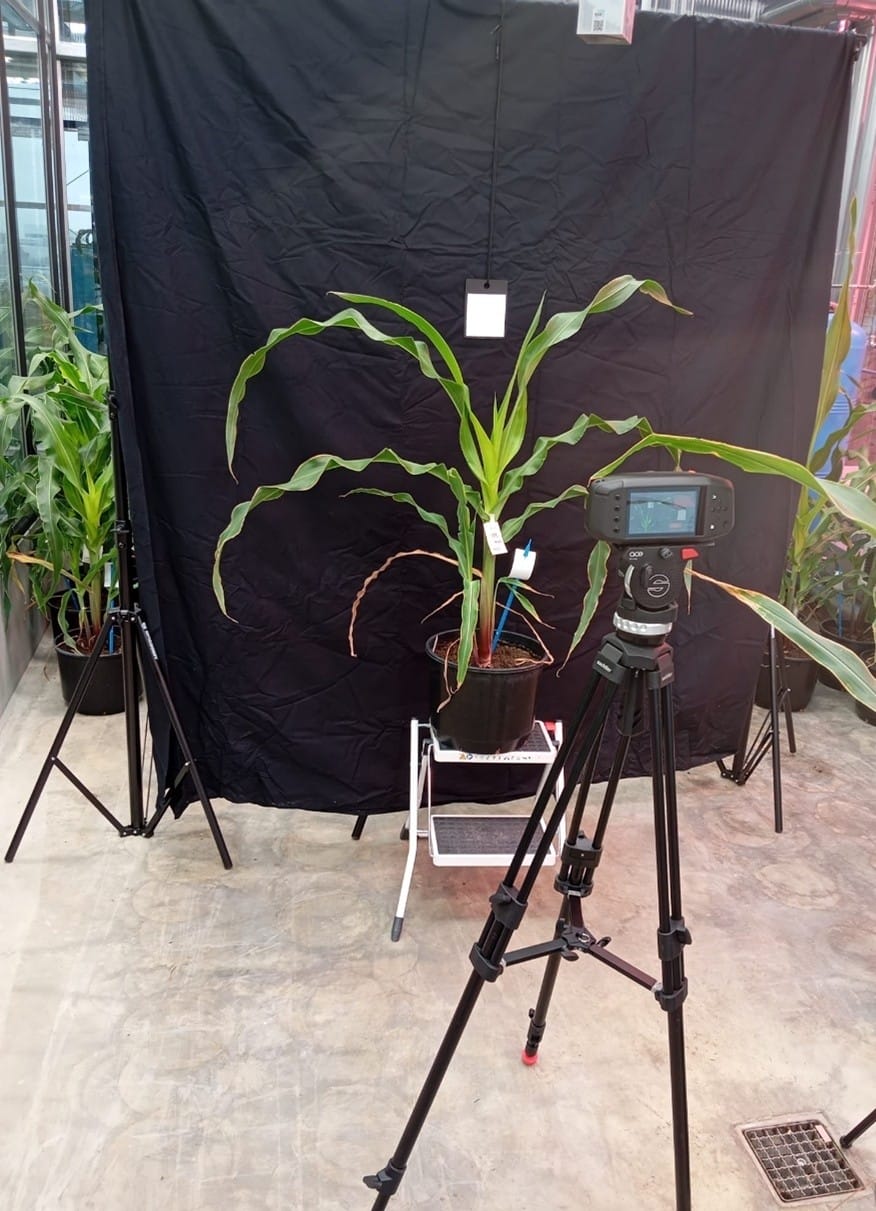
SP2
Untersuchung der physiologischen, biochemischen und molekularen Reaktionen von Mais auf gleichzeitige biotische und abiotische Stressfaktoren
SP3
Molekulare Anpassung an kontrastierende Stressregime
SP4
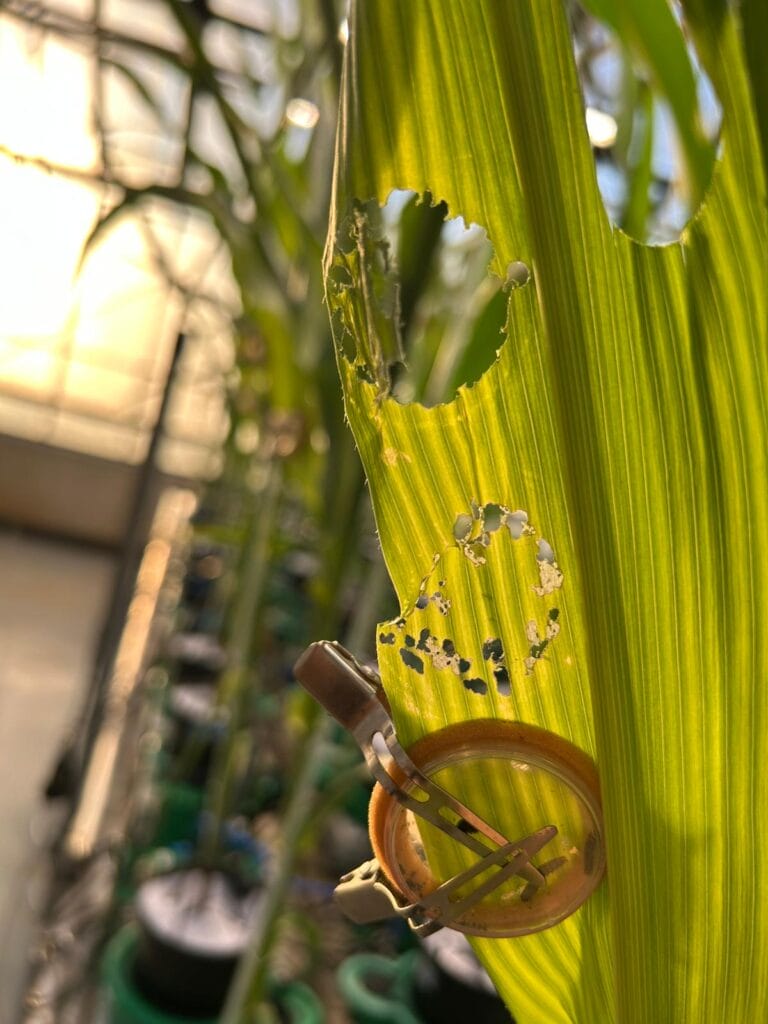
Kombinierte Auswirkungen von Stängelbohrern und abiotischen Stressfaktoren auf kommerzielle Maishybride
SP5
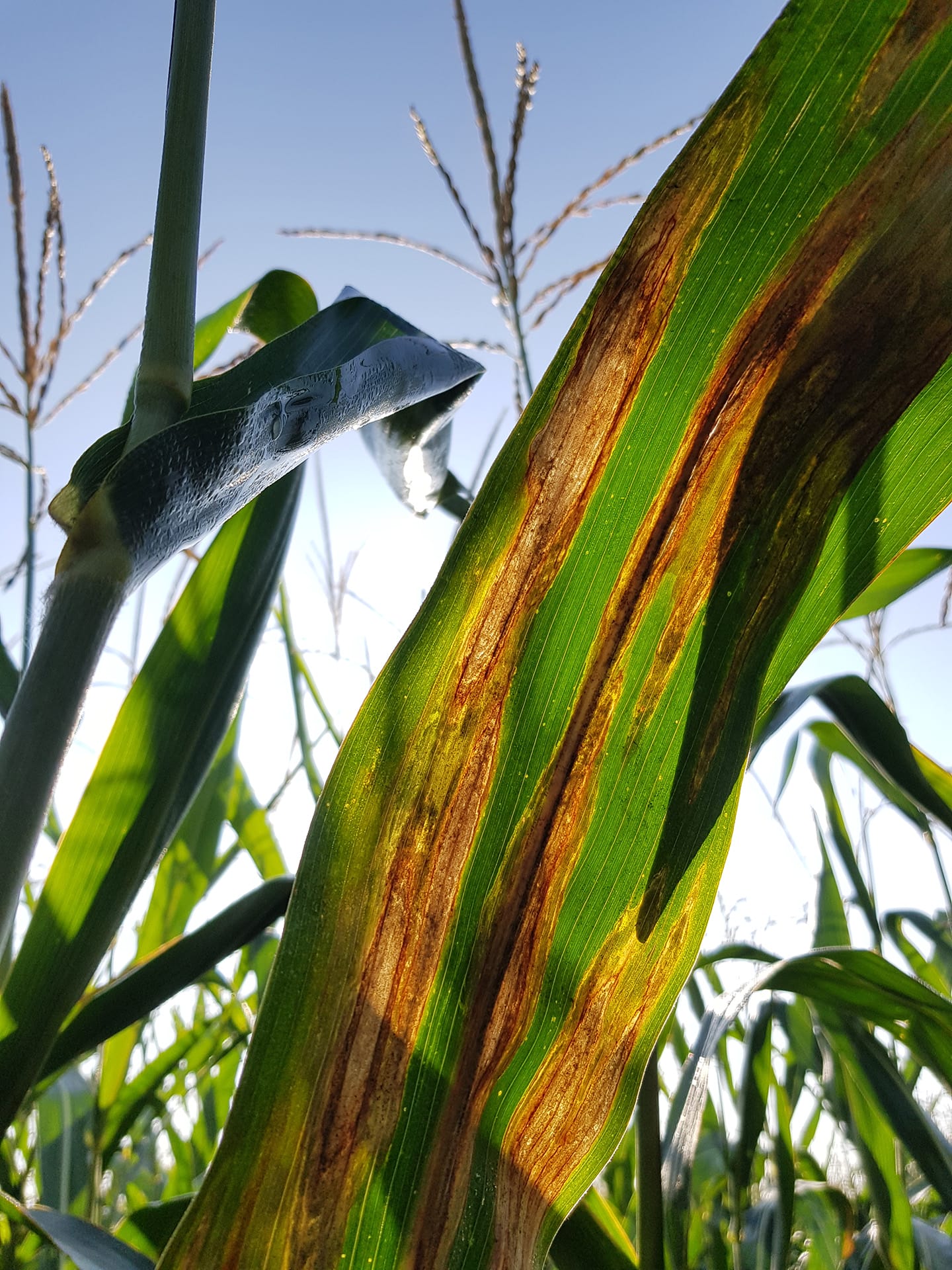
Kombinierte Effekte von Setosphaeria turcica und abiotischen Stressfaktoren auf Maisgenotypen
SP6
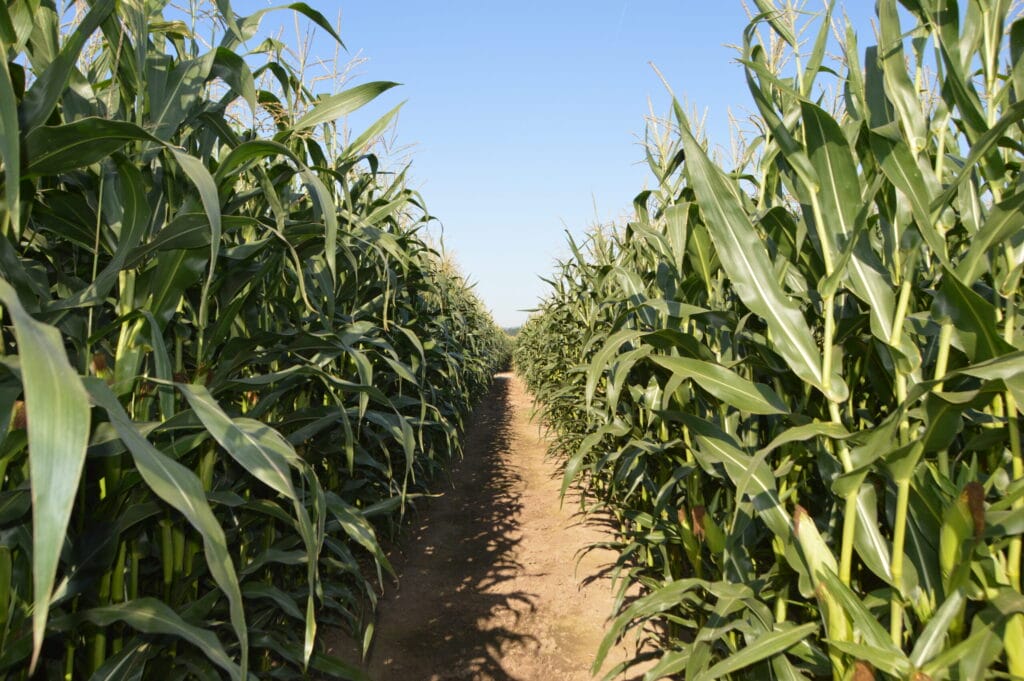
Integration der Genetik in Pflanzenwachstumsmodelle zum Verständnis der Genotyp-Reaktion auf kombinierte (abiotische + biotische) Stressfaktoren und Modellsynthese

COP – Koordinationsprojekt
Strategie, Dissemination und Kapazitätsaufbau